
Communication, or a lack thereof, is front and center in A Greater Music, (128 pages; Open Letter Books; translated by Deborah Smith) Bae Suah’s latest novel to come out in English. Our music-loving narrator is an unnamed Korean woman living on and off in Berlin and Korea, struggling to learn German. Her difficulties in the structure and rigor of academia are documented throughout, up until she meets M, an unconventional tutor who teaches with wild disregard of basic grammar and syntax in favor of a higher learning and exchange of ideas. Presented near the novel’s conclusion is their initial meeting. […]
ZYZZYVA Interview Series: Patrick Hoffman
by me
Patrick Hoffman was born in San Francisco, where for a decade he worked as both a private investigator and an investigator for the Public Defender’s Office. His first novel, The White Van, was a finalist for the CWA Ian Fleming Steel Dagger Award and was named a Wall Street Journal best book of the year. His new novel is Every Man a Menace, which Kirkus, in its starred review, called “a nasty tour de force” and a “strong and original addition to the crime fiction genre.” Hoffman spoke to ZYZZYVA Managing Editor Oscar Villalon about his new book at the Booksmith […]
Possession of the Wheel: ‘The Red Car’ by Marcy Dermansky
by Devan Brettkelly
Marcy Dermansky’s newest novel, The Red Car (206 pages, Liveright/Norton), moves much like the car it features: fast and unpredictable. It covers three stages and sixteen years of narrator Leah Kaplan’s life, beginning with her as a college freshman, then leading to her bumbling entry into adulthood, and finishing with her early thirties, when she’s a writer living in Queens with a possessive husband whom she does not love. Through it all Leah is a mess of contradictions; sexually open though terrified of affection, in earnest pursuit of her dreams but displaying a tendency for self-sabotage, “floating in unexplainable melancholy” […]
What’s There to Be Afraid Of?: Some Long-Lasting Works of Horror
by ZYZZYVA Staff
When my best friend read Charles Burns’s graphic novel Black Hole at age eleven, her parents assumed it was a harmless comic book. They were sorely mistaken, and, in her own words, Black Hole messed her up. How bad could it be,? I thought, flipping through the weighty twelve-issue collection. Black Hole is set in Seattle during the mid-1970s, when a horrific STD plagues a small suburb. Only teenagers can contract “the bug,” and like the AIDS epidemic, the town is initially unsure of how it spreads. The disease manifests itself in a variety of disturbing ways. Adolescence is already […]
ZYZZYVA Interview Series: Vanessa Hua
by me
Vanessa Hua (whose stories “The Third Daughter” and “River of Stars” appeared in ZYZZYVA No. 91 and No. 98, respectively) is the author of the story collection Deceit and Other Possibilities, named a “searing debut” by O, The Oprah Magazine. Her fiction has appeared in the Atlantic, Guernica, and elsewhere, and for nearly two decades she has been writing about Asia and the diaspora, filing stories from China, Burma, South Korea, Panama, Abu Dhabi, and Ecuador. A Visiting Editor in Creative Nonfiction at Saint Mary’s College this fall, she is also a columnist at the San Francisco Chronicle. Hua spoke to […]
Hanging in the Balance, Like a Puppet on a Hand: Bob Dylan and the Nobel Prize
by Paul Wilner
“This is really a drag—and a bore,’’ the doomed jazzster Chet Baker tells director Bruce Weber in Let’s Get Lost, in response to (sympathetic) inquiries about his drug habits. The same could be said of the recent controversy over the decision to award the Nobel Prize in Literature to Bob Dylan. In a certain sense, it all makes sense: the high-minded indignation from select members of the literary Establishment (though, some, like Salman Rushdie and Joyce Carol Oates, welcomed the decision), and disgusted repudiation of boomer nostalgia (we get it, Irvine Welsh) in other quarters. It’s of a piece with the kind […]
‘Artificial Islands’ by Earle McCartney, ZYZZYVA No. 107, Fall Issue
by me
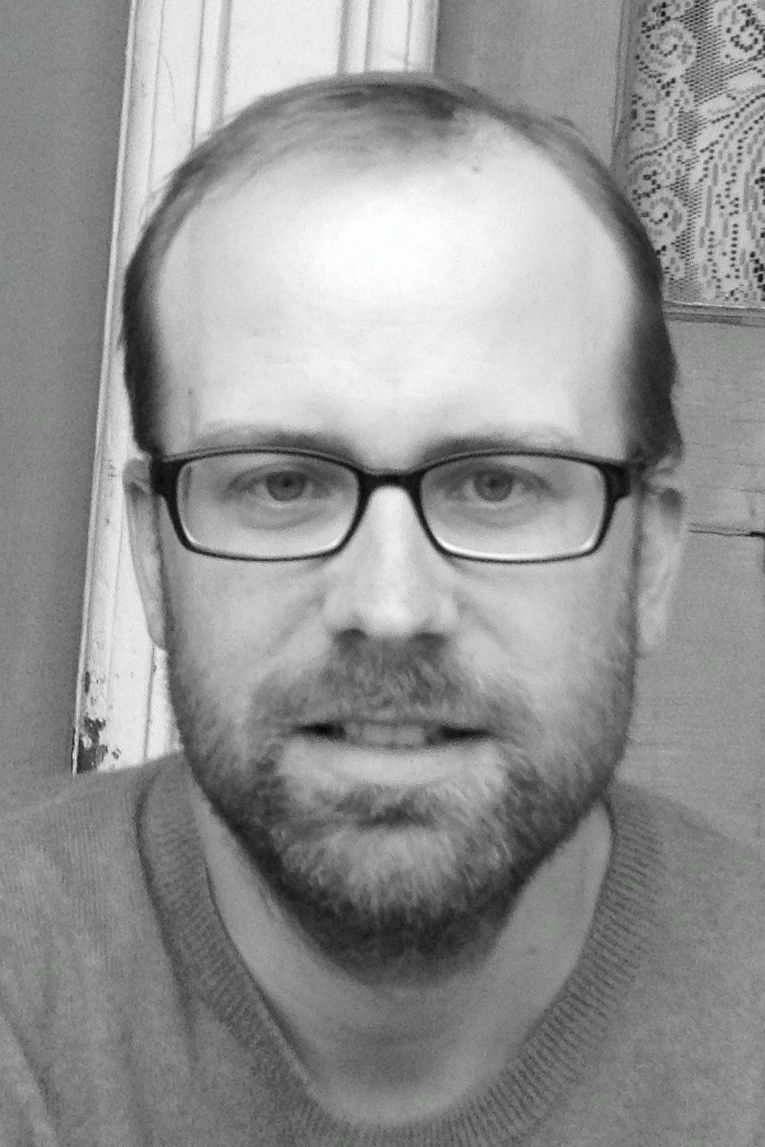 Originally from south New Jersey, Earle McCartney is a San Francisco writer. The recipient of the Joseph Henry Jackson Award in 2013, his stories “Sawmill” and “Rhizomes” appeared in ZYZZYVA Issues No. 96 and No. 101, respectively. His newest story, “Artificial Islands,” can be found in the Fall issue.
As with McCartney’s last two stories in ZYZZYVA, “Artificial Islands” beautifully captures people in close relationship to the natural world—in this case, it’s the ocean, as an adolescent girl goes fishing for sharks with her older brother, her father, and a family friend. The following is an excerpt from the story. You can read in its entirety by getting a copy here. (Note: Earle McCartney will be part of the lineup for our ZYZZYVA Fall All-Stars event at Litcrawl.)
[…]
Resisting Easy Definition: ‘My Private Property’ by Mary Ruefle
by Meryl Natchez
…there is the poem as a unit-like thing, and then there is the poem that pervades existence, which is much more like the wind, and that is the poem everyone senses from time to time, whether they can read or not, whether they ‘care’ about the unit-like thing or not.—Mary Ruefle, from a 2013 interview with Andrew David King in Kenyon Review It’s hard to define a poem these days. But whether you call the short pieces in Mary Ruefle’s new book, My Private Property (128 pages; Wave Books), poetry or prose poems or essays or flash fiction or mediations or whatever, […]
‘Kabul’ by Fatima Bhutto, ZYZZYVA No. 107, Fall Issue
by me

Fatima Bhutto, photo by Paul Wetherell
Fatima Bhutto is the author of several books, including the memoir Songs of Blood and Sword (Nation Books) and the novel The Shadow of the Crescent Moon (Penguin Press). Her work has also appeared in the New Statesmen, the Daily Beast, the Guardian, and other publications. She lives in Karachi, Pakistan.
Her story “Kabul” appears in the Fall issue. The tale of Sheryar, a feckless young man, and Soraya, his pregnant—and even younger—lover, Bhutto’s story casts a cold (though not unsympathetic) eye on people trapped by circumstances seemingly beyond their power to change. The following is an excerpt from her story, but it can be read in full in our Fall issue, which you can order here.
[…]
Under the Volcano: ‘Moonstone: The Boy Who Never Was’ by Sjon
by Devan Brettkelly
Sjon’s latest novel, Moonstone: The Boy Who Never Was (Farrar, Straus, and Giroux Books, 145 pages), set in Reykjavik in 1918, is the story of sixteen-year-old Máni Steinn (a.k.a. Moonstone). The boy’s guardian is “the old lady”—his grandmother’s sister who took him in after his mother died when he was just six. They live with “the landlord,” a man she raised as a nanny and who lets them stay in his garret space rent-free. To the concern of the old lady, Máni is “such a loner that rather than go out and play with his classmates he preferred to hang […]
“The Long Views Are Terrific”: Some Words for Bill Berkson
by Paul Wilner
I was sad when I heard Bill Berkson died in June. I knew he’d been ill but didn’t know the details. But he always seemed to be the picture of a gentleman poet—by that, I don’t mean the stuffy, overly courtly, bow-tie beclad figure of an academic measuring his words in coffee spoons, of course. Or even exuding the quieter scent of class, though Bill clearly knew his way around the world of high society: His mother, Eleanor Lambert, was regarded as the doyenne of fashion publicity, and his father, Seymour Berkson, had been a high-ranking Hearst executive and for […]
Roaming the Metaphorical ‘Jungle Around Us’ : Q&A with Anne Raeff
by Devan Brettkelly
In Anne Raeff’s story collection, The Jungle Around Us (140 pages, University of Georgia Press), nine stories span decades, covering numerous lives and multiple “jungles”; urban, Amazonian, and metaphorical, to name a few. In these “jungles,” Raeff’s characters face a Russian nesting-doll of isolation. Here, the land itself is alien to those displaced far from their homes. Language barriers and internal turmoil prevent communicating fully with those around you. But Raeff also shows how these same places can be a shelter, a refuge for embracing or experimenting with aspects of oneself that may have otherwise been ignored or hidden. Some […]