Q&A with Matthew Clark Davison: ‘Doubting Thomas’ and Our Need for a Pariah

by Adam Winograd
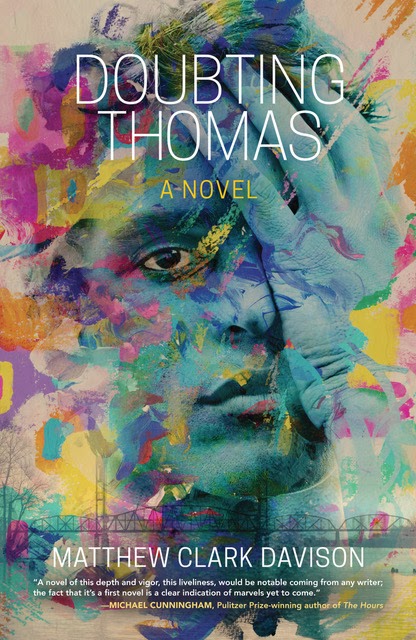
Matthew Clark Davison’s first novel, Doubting Thomas (272 pages; Amble Press) tells the story of a fourth-grade teacher, gay and out, named Thomas McGurrin, who—while navigating the familial turmoil of his brother’s recent cancer diagnosis—is falsely accused of inappropriately touching one of his  students at a private school in Portland. The community, however unintentionally, goes from promoting Thomas as a symbol of their own progress to casting him as a pariah. Thomas, even after being found innocent, is forced to leave his job.  Davison’s writing has been published widely, including in Guernica, The Atlantic Monthly, Foglifter, Fourteen Hills, and other […]

Continue Reading

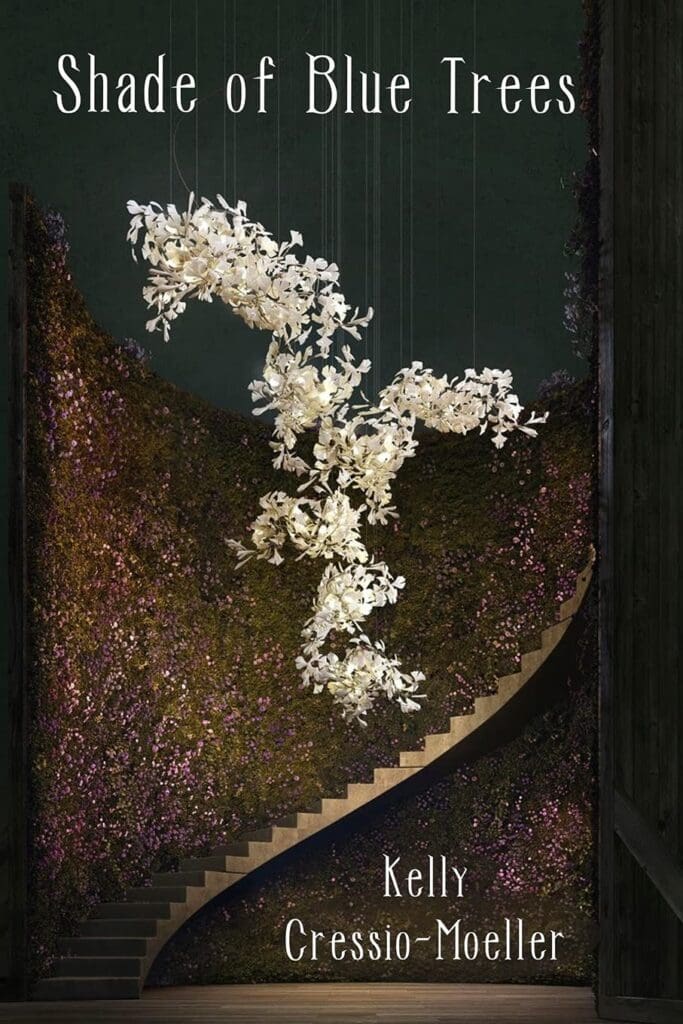
Q&A with Kelly Cressio-Moeller: ‘Shade of Blue Trees’ and the Presence of the Body

by Alana Frances Baer

Kelly Cressio-Moeller’s debut poetry collection, Shade of Blue Trees (79 pages; Two Sylvias Press), consists of thirty-seven poems, broken into four parts. Cressio-Moeller has long established herself as both a visual artist and writer, with her widely published poetry earning nominations for the Pushcart Prize, Best New Poets, and Best of the Net awards. Having spent most of her life in San José, California, Cressio-Moeller draws heavily from California terrain. She points to the heavy knots of human relationships, reminding us that love comes with grief. And she writes of and from daily life, mapping the jagged edges of relationships […]

Continue Reading

Spotlight on Issue 120: Q&A with Benjamin Voigt

by Owen Torrey

What do an iPhone and a lyric poem have in common? It’s a question that animates the work of writer and technologist Benjamin Voigt, whose poems forge nimble, unexpected connections between the poetic and the digital. In Voigt’s new poem, “Walden Two”—which appears in our Technology-themed Issue 120—we encounter a speaker sorting through layered circuitry of memory, thought, and language. “I’ve held onto that last line for a long time,” Voigt reflects, mid-poem, “and don’t know if I’ve used it right, / or if this is a glitch / in my programming I’m still debugging.” We recently spoke with Voigt […]

Continue Reading

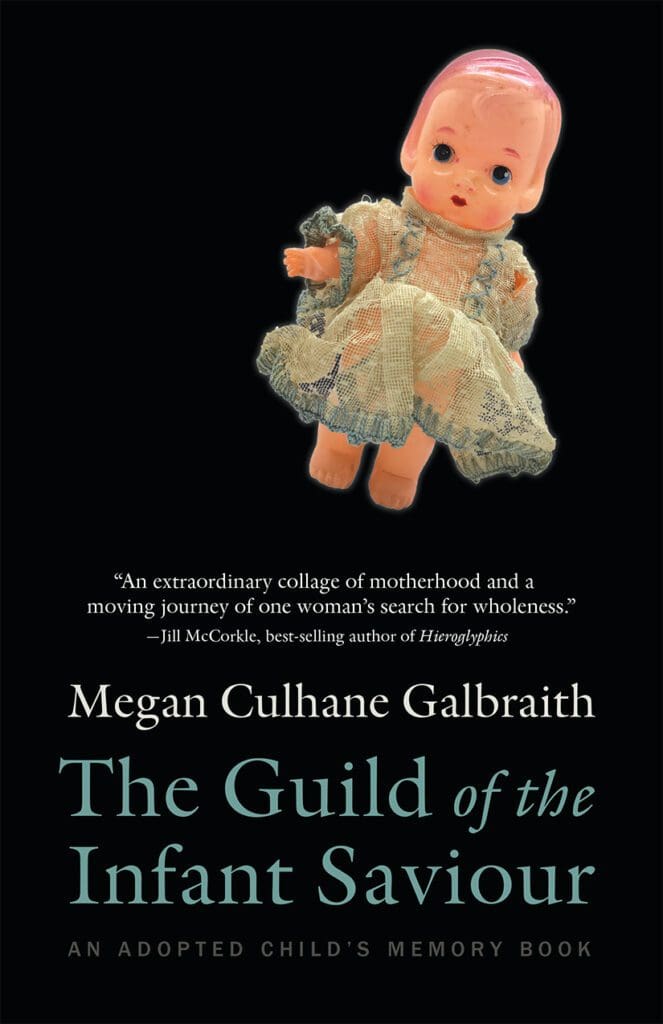
Q&A WITH MEGAN CULHANE GALBRAITH: ‘THE GUILD OF THE INFANT SAVIOUR’ AND DIORAMAS OF A CHILDHOOD

by K.L. Browne

In Megan Culhane Galbraith’s hybrid memoir, The Guild of the Infant Saviour: An Adopted Child’s Memory Book (288 pages; Mad Creek Books), she investigates our desire for belonging with generosity and an eye for hidden truths. Galbraith was adopted as a baby in the late 1960s, and through a dual lens of subject and observer, she considers this tumultuous period of sexual freedoms for women and its consequences. The book’s unique form bridges the private and historical. Galbraith looks at programs for women and infants that echo an unconscious disregard; Catholic charities claimed to save unwed mothers, a domestic economy […]

Continue Reading

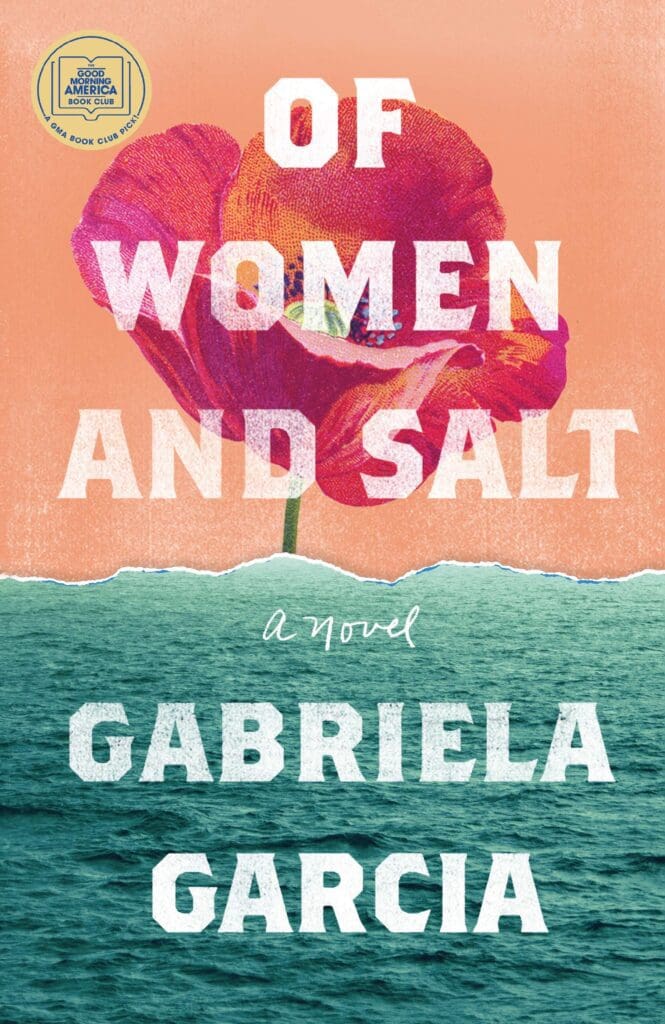
Q&A with Gabriela Garcia: ‘Of Women and Salt’ and the Cost of Survival

by Kyubin Kim

Of Women and Salt (224 pages; Flatiron Books), the first novel by Gabriela Garcia, follows four generations of women, from 19th century Cuba to present-day Miami. While the book primarily concerns Cuban American Jeanette’s journey to recover her matrilineal family history, Garcia weaves in the characters’ personal testimonies with a delicate understanding of how women’s lives are preserved incompletely, lost in migration, or erased. Training her eye on the Cuban diaspora and humanizing the nascent debates about U.S. immigration, Garcia meditates on the strength of women and frames motherhood as not mere sacrifice for the future generations, but affirming the […]

Continue Reading

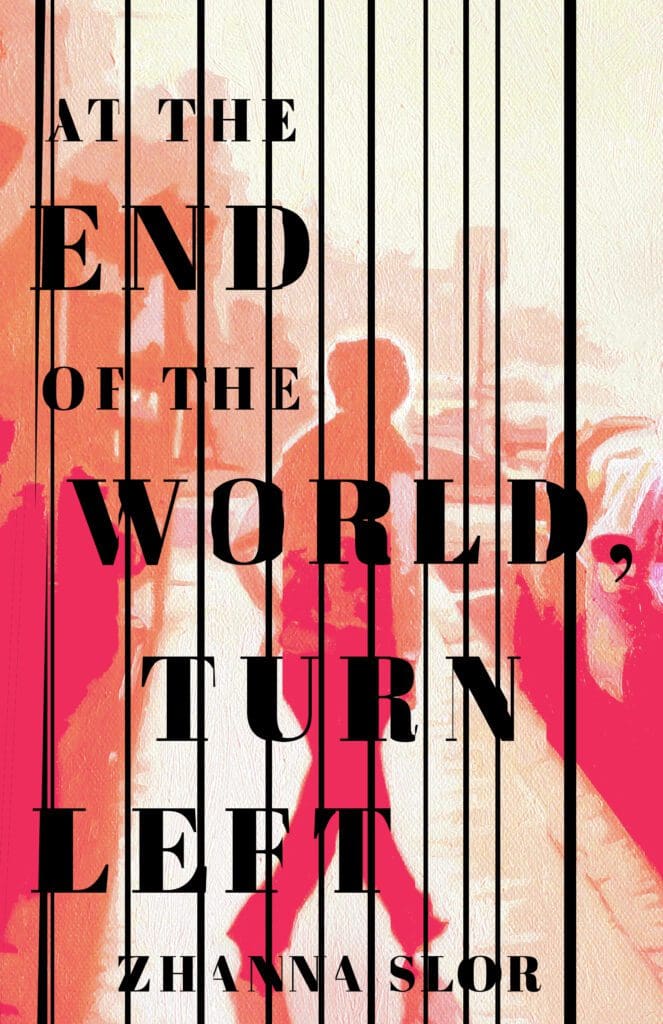
Q&A with Zhanna Slor: ‘At the End of the World, Turn Left’ and the Struggle with Identity

by Christine Sneed

Zhanna Slor’s debut novel, At the End of the World, Turn Left (304 pages; Agora Books), is informed by a fine balance of comedy and drama. Set in Milwaukee in the late aughts, the novel’s two point-of-view characters, sisters Masha and Anna, alternately cast their ironic, sometimes bemused gazes on their family’s Russian Jewish immigrant circumstance, while also chafing strenuously at the limitations and the fear informing their parents’ and grandparents’ choices in America. Both sisters are progressive, adventurous, often funny young women who have no patience for their elders’ stern refusal to indulge their curiosity—especially Anna’s.  When the novel opens, […]

Continue Reading

Draw a Bigger Circle: Q&A with Joyce Jenkins

by Meryl Natchez

To anyone in touch with the Bay Area literary scene, the publication Poetry Flash is part of the furniture—comfortable, essential, taken for granted. Its small office on Fourth Street in Berkeley is crammed with books, journals, and broadsides—a crush of continually incoming poetry, reviews, and fiction managed by Joyce Jenkins. She is the force behind this literary nexus, and  has been dedicated to the Bay Area poetry world since the early ’70s, working daily to serve that community and advocate for the arts in general. This interview describes her history with Poetry Flash and how the non-profit organization has grown […]

Continue Reading

Q&A with Daniel Handler: ‘Bottle Grove’ and a Changing San Francisco

by Oscar Villalon

In Daniel Handler’s seventh novel, Bottle Grove (227 pages; Bloomsbury), which was published in the fall, San Francisco gets both a kiss on the cheek and a flick to the ear. For those who have lived in the city for two or more decades, the novel has a magnetism perhaps unfelt by others who’ve only known the place in its most recent incarnation—as that of a giant Lego set, one pulled apart and restacked according to the heedless whims of the tech industry. Handler, a longtime San Franciscan, evokes the city in its beloved pre-boom familiarity, but because he’s telling […]

Continue Reading

Q&A with Heather Christle: ‘The Crying Book’ and a Nourishment from Sharing

by

Over the course of The Crying Book (208 pages; Catapult Press), Heather Christle examines the phenomenon of crying from every possible angle: social, cultural, biological, and historical. She asks the tough questions, ones that science still can’t answer: Why do we cry? And what does it mean to cry? Christle’s inquiry is rigorously researched, but it is also deeply personal. While she was writing The Crying Book, she was doing a lot of crying herself, grappling with depression, mourning the passing of a dear friend, and preparing to become a mother. The scope of The Crying Book is surprisingly vast—we […]

Continue Reading

Q&A with Seth Borgen: ‘If I Die in Ohio’ and Some Extraordinarily Unremarkable True Thing

by

The stories in Seth Borgen’s collection If I Die in Ohio (160 pages; New American Press), winner of the New American Fiction Prize, are like bars where I have learned more about people and about writing than anywhere else, except perhaps from books. And like those bars, they are places where people who would never have crossed paths come together—a retired, well-known architect and a young high school dropout, for example; a slacker, stoner, atheist and a Mormon. The characters do not seek each other out, but once they do, something happens. Nothing huge or life-changing but something that helps […]

Continue Reading

‘A Special Kind of Freedom in Failure: A Conversation with Jim Gavin,’ ZYZZYVA No. 116

by Oscar Villalon

Jim Gavin’s fiction has appeared in The New Yorker, The Paris Review, Zoetrope, Esquire, Slice, The Mississippi Review, and ZYZZYVA. Based in Los Angeles, he is also the creator of the critically-acclaimed television series Lodge 49, now in its second season. You can watch Lodge 49 on AMC every Monday night at 10pm. Issue 116 features a Q&A with Gavin, an excerpt from which appears below: OSCAR VILLALON: As a prose writer, as somebody who conceives of narrative through the written word, how did you go about recalibrating your sense of telling a story for a visual medium? JIM GAVIN: I have a dumb […]

Continue Reading

ZYZZYVA Interview Series: Meron Hadero

by ZYZZYVA Staff

Meron Hadero is an Ethiopian-American born in Addis Ababa who came to the U.S. in her childhood via East and West Germany. Her short stories appear in Best American Short Stories, Selected Shorts on NPR/PRI, McSweeney’s Quarterly Concern, ZYZZYVA, The Iowa Review, The Missouri Review, and other journals. Her writing has also been published in The New York Times Book Review, the anthology The Displaced: Refugee Writers on Refugee Lives, and others. Her work has been supported by the International Institute at the University of Michigan, the Elizabeth George Foundation, and Artist Trust. Hadero has held fellowships at the World […]

Continue Reading